
Beyond the Blur: What Filmmaking Lenses Teach Us About Human Vision
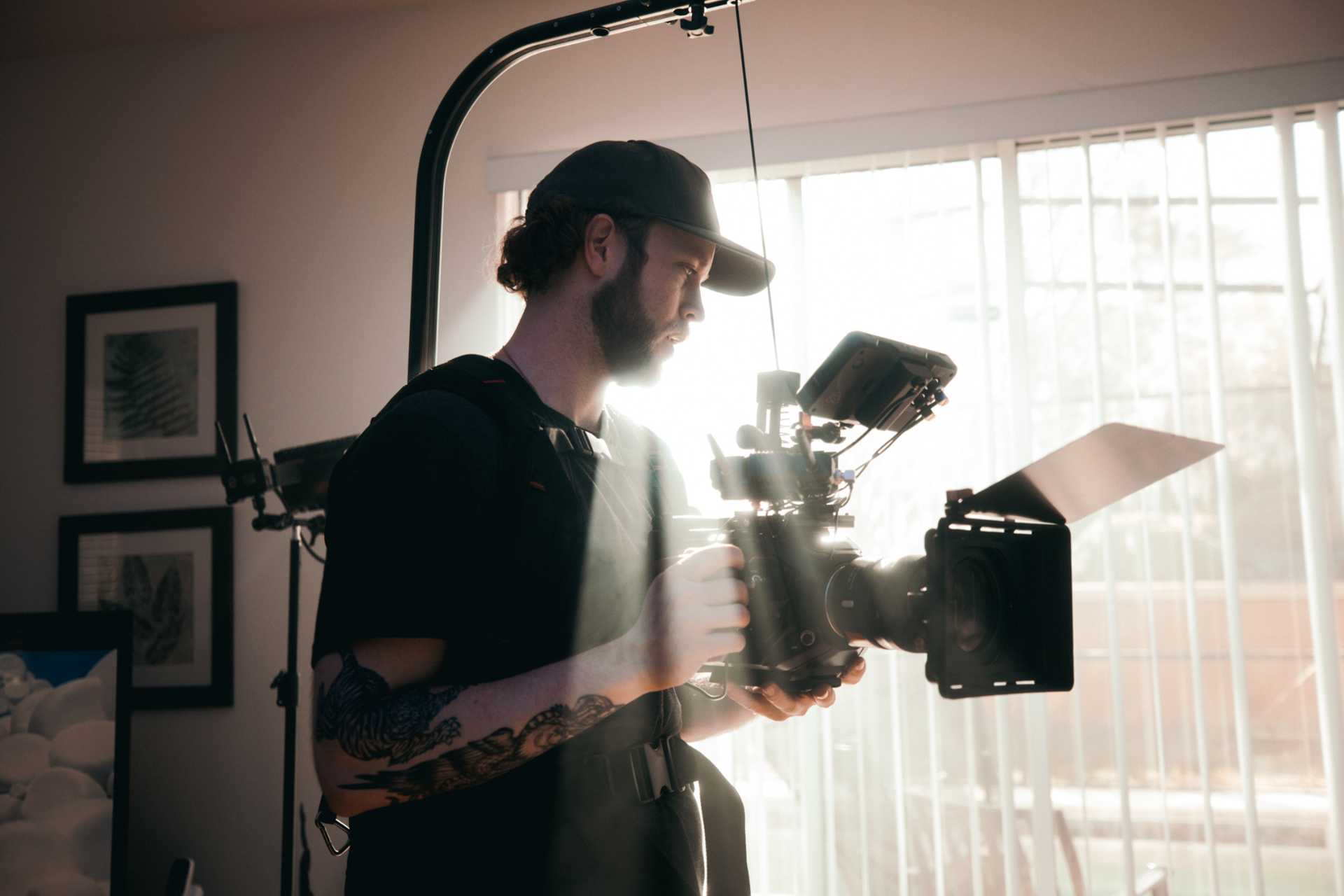
As a professional videographer, my entire world is dictated by the mechanics of glass. Every project relies on selecting the perfect focal length, calibrating the aperture, and ensuring focus tracking locks onto the subject with razor-sharp precision. When you look through a high-end cinema camera, you realize that filmmaking is essentially an attempt to mimic the incredible complexity of natural sight. The professional cameras used to capture weddings, commercial campaigns, and documentaries are all engineered to copy a single masterpiece. They are modeled directly after the most advanced optical instrument in existence: the human eye.
This deep design connection means that the tech choices a production crew makes every day are fundamentally biological. We use coated glass, mechanical iris blades, and digital sensors to replicate what your brain handles in a fraction of a second. When you appreciate the engineering behind a cinema setup, you begin to see your own eyes in a completely new light. They are not just organs; they are the ultimate high-definition camera package.
Yet, while filmmakers spend tens of thousands of dollars maintaining, calibrating, and cleaning their physical camera packages, many people completely neglect their biological optics. We accept minor blurs, nighttime glares, and constant squinting as a normal part of daily life. Understanding the fascinating technical parallels between a luxury camera lens and your own eyes changes how you value your sight. Just as a filmmaker relies on a technician to keep their glass pristine, a regular visit to a premium optometrist is the ultimate calibration your body needs to experience life in flawless high definition.
The Aperture Ring: How the Iris Controls the Dynamic Range of Light
In filmmaking, the aperture is an internal lens mechanism made of overlapping metal blades. A filmmaker twists the aperture ring to adjust this opening and regulate exactly how much light hits the digital sensor. For example, shooting a bright summer beach scene requires closing the aperture down to keep the image from blowing out. Moving into a dim reception hall requires the opposite approach, forcing you to open the lens wide to capture every available scrap of ambient light.
Your eye performs this exact mechanical calibration automatically thousands of times a day. Your iris acts as the biological counterpart to those metallic blades, while your pupil serves as the actual opening. Stepping into the bright midday sun causes your iris to instantly contract. This shrinks your pupil to protect your retina from overexposure. Conversely, walking into a dark movie theatre makes the iris dilate wide to maximize your low-light visibility. However, when fatigue or aging slows down this biological aperture, you can experience severe night blindness or painful glare that requires a professional optical evaluation.
Depth of Field and the Frustration of Lens Hunting
One of the most popular stylistic tools in modern filmmaking is a shallow depth of field. This effect keeps the main subject incredibly sharp while blurring out the background into a soft, creamy texture. To achieve this, a filmmaker uses a wide-open lens that narrows the plane of sharp focus down to a few inches. If the subject takes a half-step forward or backward, the camera must instantly adjust its focus tracking mechanism to keep the image sharp.
When your eyes are healthy, your natural internal crystalline lens flexes effortlessly to mirror this tracking ability. It instantly shifts your focus from a smartphone screen to a distant horizon. However, structural vision issues like myopia or astigmatism cause your eye to lose this flexible tracking speed. This loss makes your eyes continuously hunt for clarity instead of snapping into focus. This mechanical failure forces you to squint to artificially narrow the path of light. That constant effort strains your facial muscles, causing chronic tension headaches by the end of the day.
Understanding the Parts of Your Biological Camera
To better visualize how your vision works, it helps to map your eye to modern camera technology. The very front of your eye features the cornea. This layer acts exactly like the front element glass of a premium cinema lens. Its job is to bend incoming light rays while protecting the delicate structures resting behind it. When the shape of this surface becomes slightly warped, it results in astigmatism, mirroring the exact blur and distortion you would see from a dropped or physically damaged camera lens.
Further inside sits the retina, which plays the exact same role as a high-resolution digital camera sensor. This delicate surface receives the focused light patterns delivered by the front optics. It then converts those patterns into viewable data for your brain to process. Experiencing macular issues or visual blind spots is functionally identical to a camera sensor suffering from dead pixels or data corruption. Protecting this layer requires consistent professional diagnostic care. Routine checkups ensure your internal imagery never suffers from sudden data loss or permanent pixel degradation.
Re-Centring Your Glass: The Power of Professional Calibration
When a production crew notices that a cinema lens is producing soft, distorted images, they do not just keep shooting and hope for the best. They immediately pack up the gear and ship it to an optical lab for a complete structural calibration. Technicians use precision lasers to realign the internal glass elements until the focal plane is perfectly flat and true once again.
Your vision deserves the exact same level of professional structural care. Experiencing life through a fuzzy, uncalibrated lens limits how you interact with the world around you. Modern vision correction procedures—ranging from customized prescription lenses to advanced laser reshaping—act as a permanent factory reset for your eyes. By correcting the curvature of your cornea, medical professionals ensure that light lands perfectly across your retina, eliminating the blur completely and unlocking true cinematic clarity.
Upgrade to a High-Definition Lifestyle
Living with uncorrected vision is the lifestyle equivalent of filming an entire movie on a cheap, out-of-focus toy camera. Ignoring ongoing eye strain, blurry edges, and nighttime distortion only accelerates fatigue and compromises your daily safety. By booking a comprehensive assessment with an experienced eye care team, you take control of your most valuable assets.
Calibrating your biological lenses ensures you can experience every milestone, sunset, and close-up detail exactly as intended. It restores vivid contrast and razor-sharp clarity to your daily life. Taking this proactive step transforms your everyday world into a true, high-definition big-screen masterpiece.
